The Belonging Toolkit
Co-Designing Training with and for Community Disability Support Workers
To belong is much more than just physical presence. To belong involves feeling respected, valued, and like you can be your authentic self. People with intellectual disabilities face many barriers to feeling a sense of belonging in their homes, communities, and social circles. Recognizing this, Skills Society, is building something called The Belonging Toolkit. This interactive training experience is being co-designed with community disability support workers, to help supports better understand what belonging is and how they can facilitate it in the lives of those they work alongside. This co-design work is generously funded by the Alberta Disability Workers Association (ADWA), supported by Occupational Therapy Students from the University of Alberta, and rooted in learning from The Belonging Project, an inclusive research project that explored belonging with five adults with intellectual disabilities.
What gaps does the toolkit fill?
Community disability support workers play a significant role in shaping opportunities for belonging in the lives of the people they serve. And yet, support workers often do not have the opportunity to think deeply about belonging and their role in it. Funding constraints make it difficult both for service providers to bring support workers together for learning and for support workers to find time during their shifts to do the work of supporting belonging (e.g. if you are short staffed, ensuring the people you serve basic needs are met will be prioritized first). Over the last decade there has also been an erosion of knowledge of disability studies and the history of disability rights in the sector with the closure of many post secondary programs and a lack of incentive for frontline workers to pursue higher education.
The Belonging Toolkit
The Belonging Toolkit is being thoughtfully designed to address this gap as a low cost option that encourages ongoing reflection, active engagement, and application on the job rather than a short term, passive intake of information. Through a subscription box-style resource that includes hands-on activities and guided exploration, support workers are invited to think critically about belonging and how it can be fostered in meaningful and individualized ways for the people they support. A hope is that the toolkit helps build support worker reflexivity, honing their ability to reflect on their own thoughts and actions and how those shape opportunities for others.
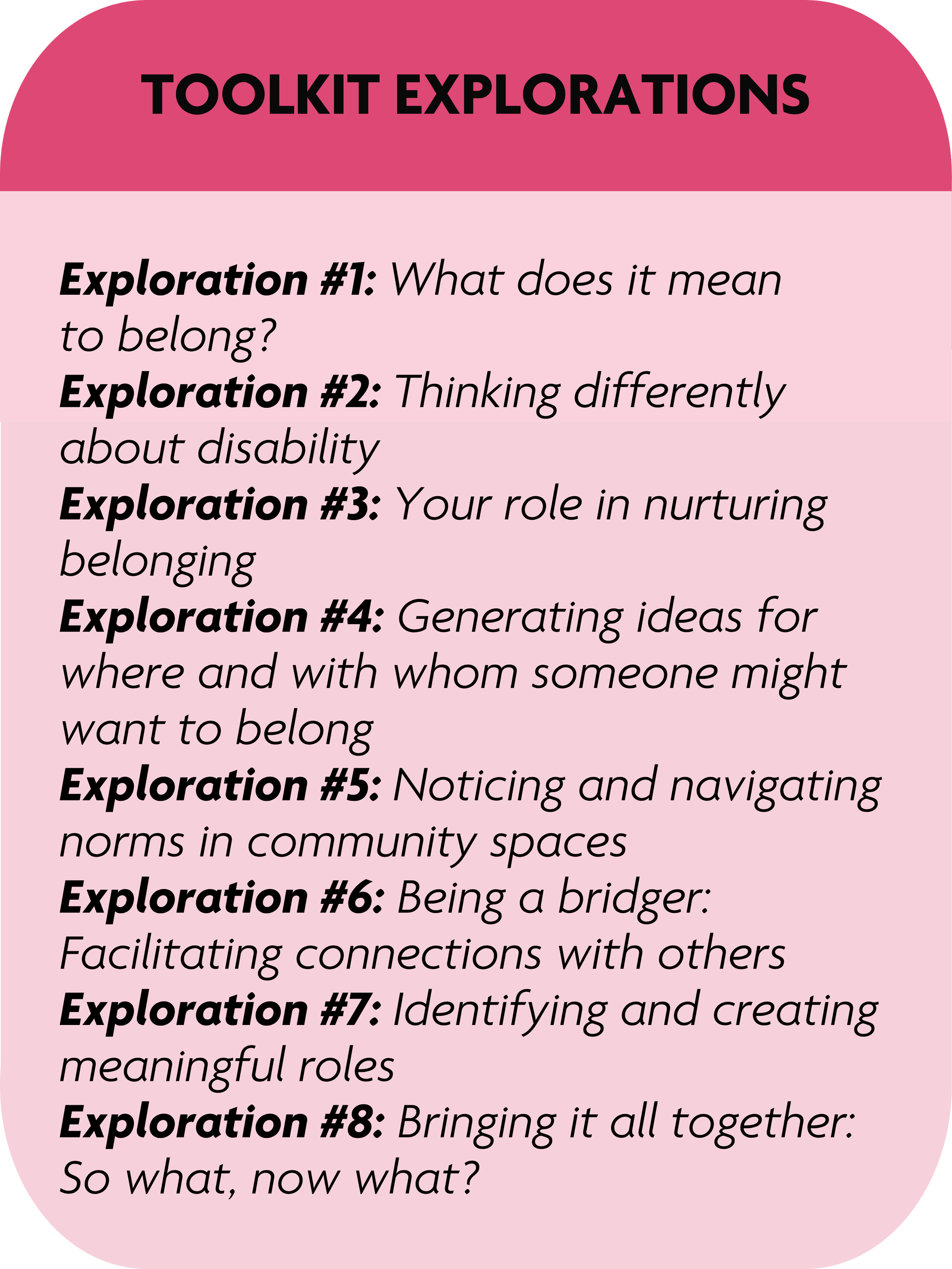
The toolkit will contain 8 distinct explorations completed over several months with both opportunities for individual and small group reflection. The explorations move support workers from a place of reflection to action, starting with activities that disrupt understandings of inclusion and belonging and ending with prompts to apply new learning in their own work.
The First Exploration: “What Does It Mean to Belong?”
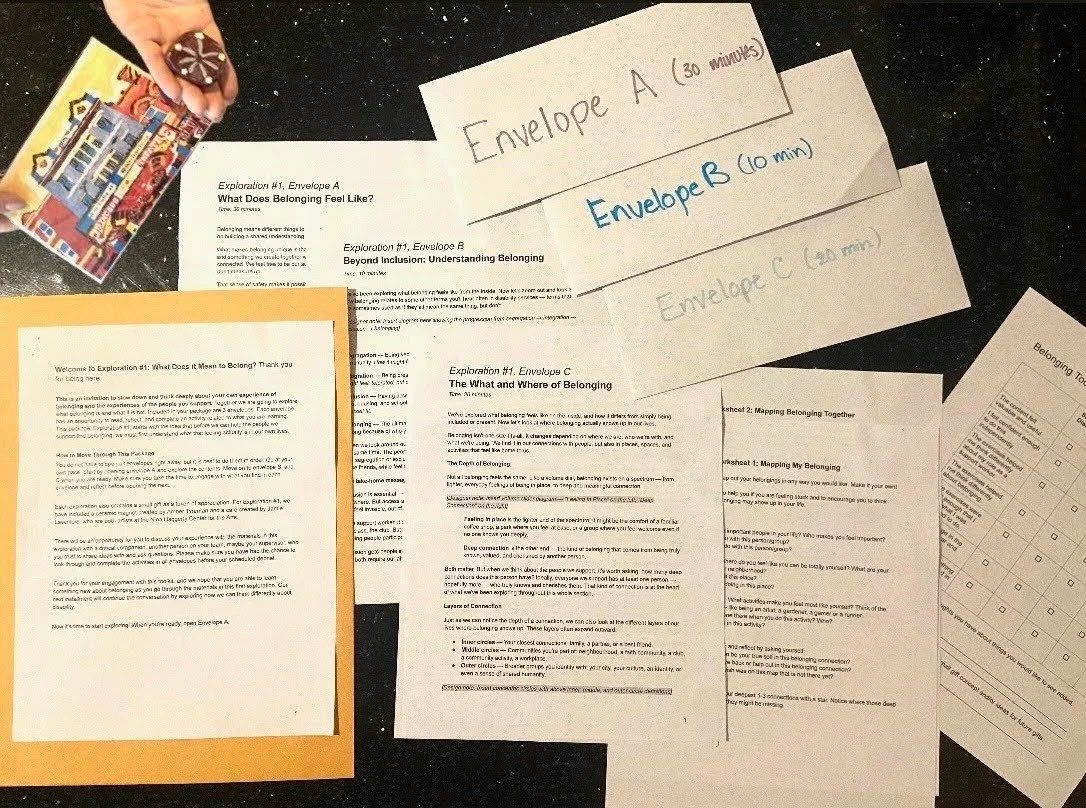
An early prototype of Exploration One including a Welcome Letter, Three Activity Envelopes, and a Feedback Form
In collaboration with a group of occupational therapy students from the University of Alberta, leaders within Skills Society developed the first exploration titled: “What Does It Mean to Belong”. This exploration encourages support workers to first reflect on their own sense of belonging, and then consider how it can apply to the people they support. This first exploration highlights the importance of recognizing that belonging is deeply personal and unique to every individual. Within this first exploration, you can expect to find:
A welcome letter introducing the purpose and structure of the toolkit
Three separate envelopes, each containing a different belonging-related topic with associated reflection points and activities to complete on the job
A small, delightful gift to express appreciation for the support worker’s commitment to fostering belonging. Created by people with intellectual disabilities, this gift will meaningfully reflect belonging and inclusion.
Testing and Refining the Toolkit
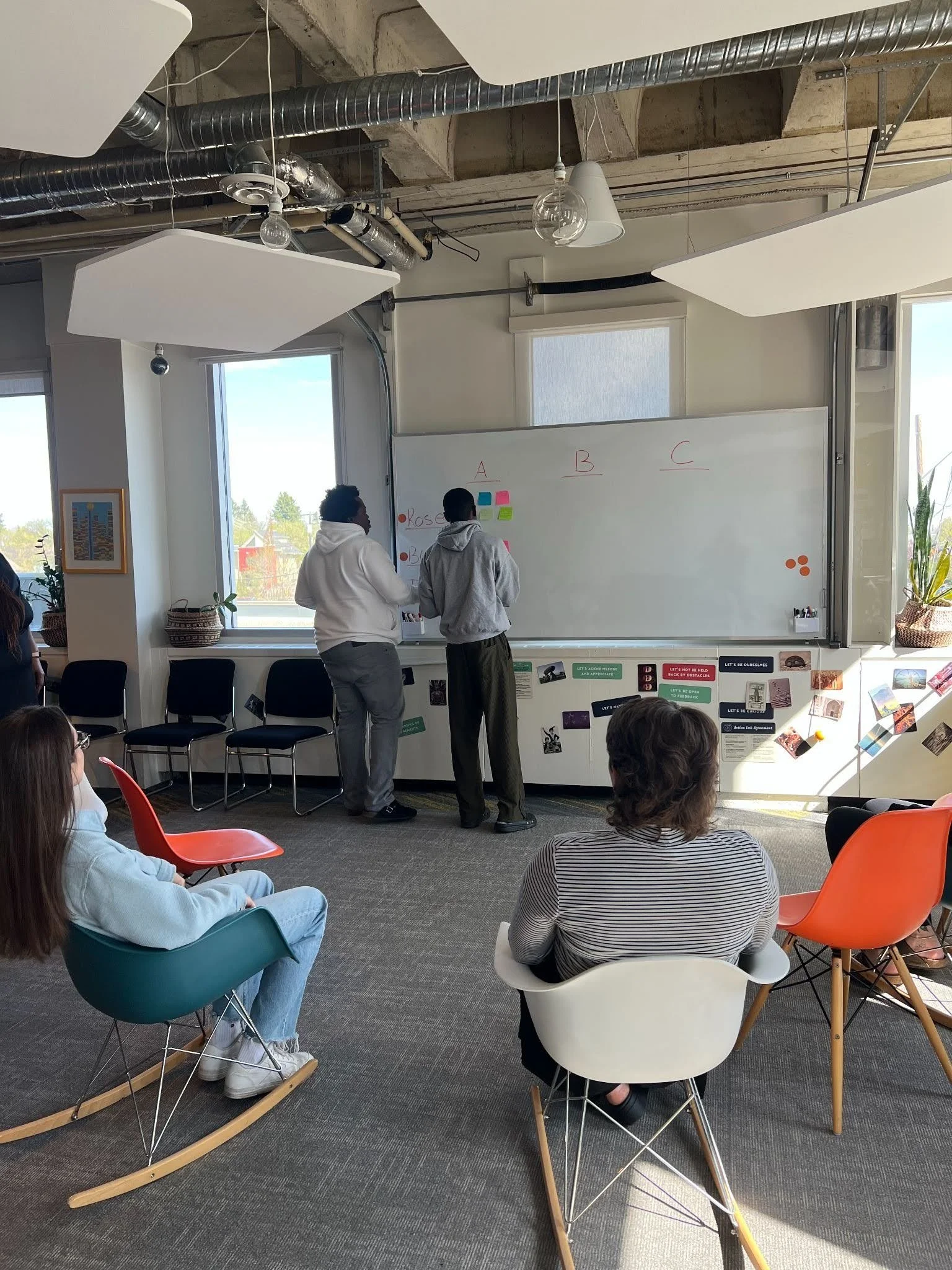
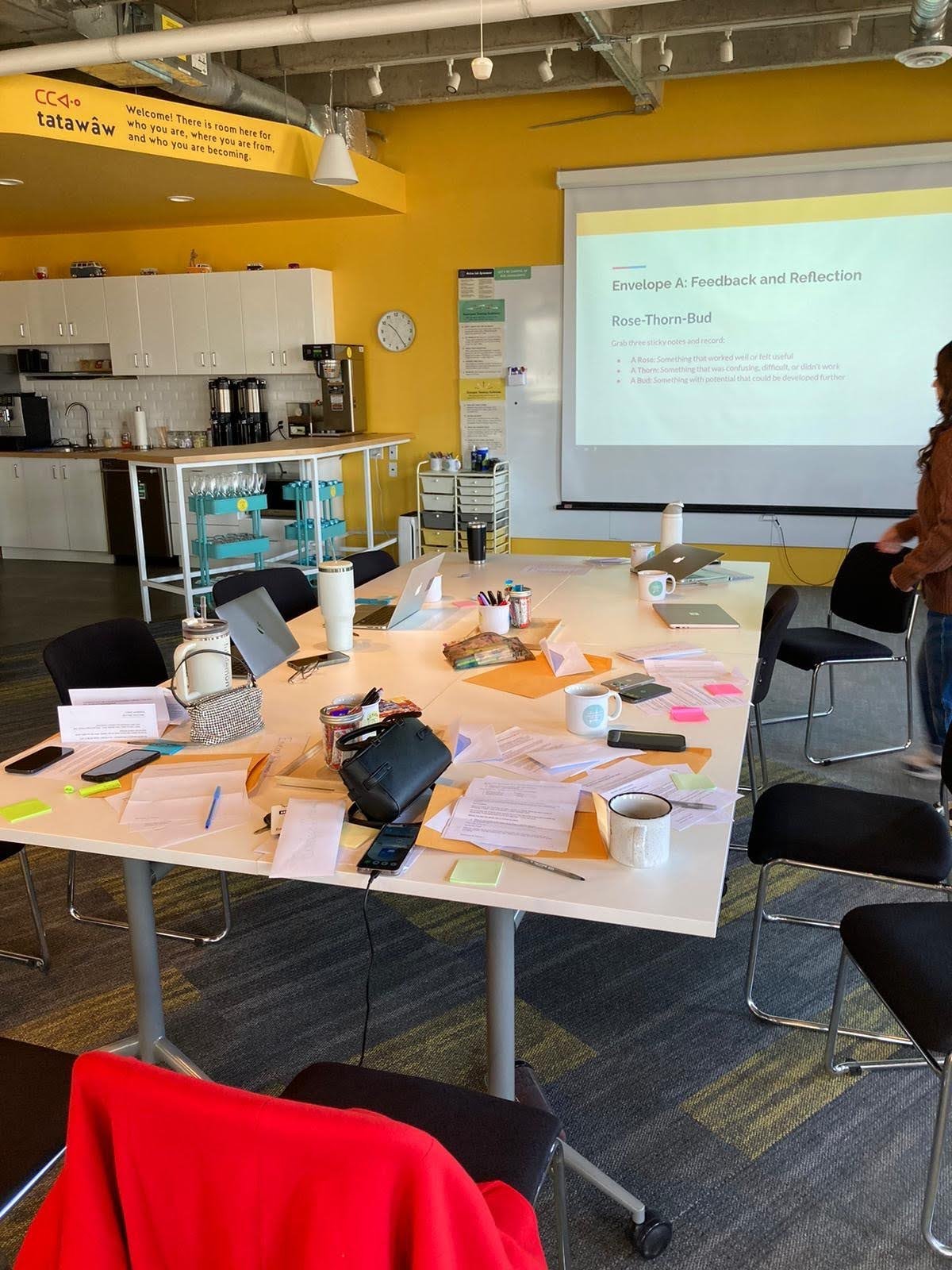
To develop the toolkit we are following an iterative process of developing content, testing it with support workers, incorporating feedback, and testing again. This iterative process, allows adjustments to be made based on real-world experiences and perspectives. Recent testing sessions included getting feedback from managers and frontline support workers after they engaged with the draft content. Overall, feedback from both trial sessions affirmed the toolkit as a valuable, clear, and accessible resource which can help support workers reflect deeply on their role and reimagine what belonging can look like in practice. Some challenges we are still problem solving around include how to make the toolkit delivery affordable and sustainable to diverse organizations and how to ensure support workers have adequate access to a leader or facilitator with deep knowledge on the topic to help guide reflection and learning.
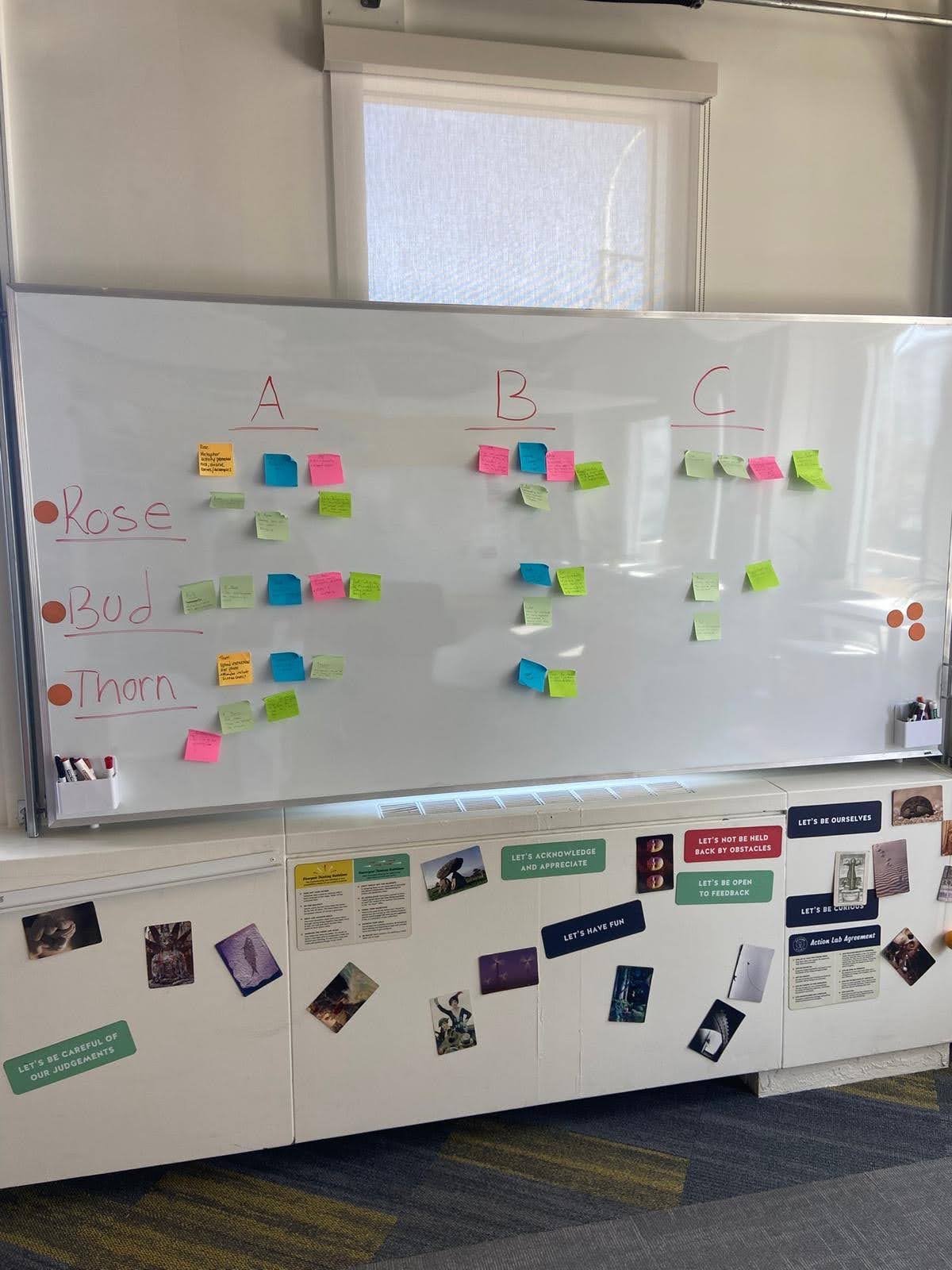
Testing sessions with managers and frontline support workers in the Action Lab
Incorporating the Experiences of People with Intellectual Disabilities
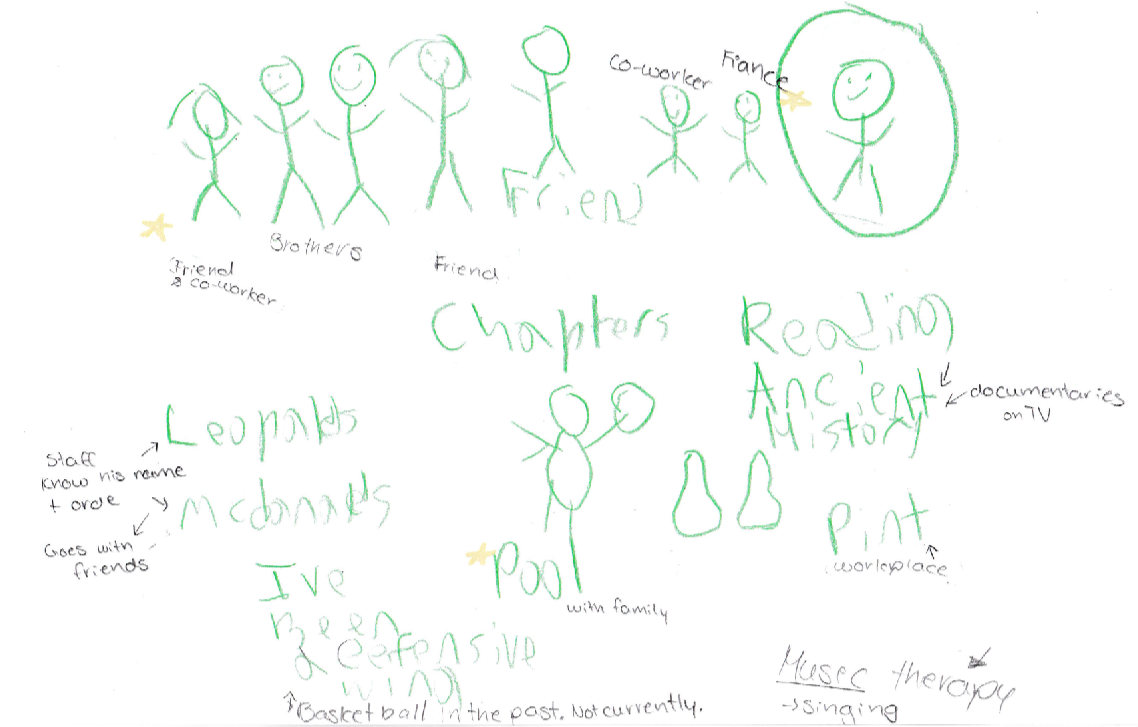
An example Belonging Map created by Ivan, a young man with an intellectual disability.
Reflecting a commitment to inclusion, we are engaging people with intellectual disabilities in the design of content (these folks are being equitably paid for their contributions). Examples used throughout the toolkit are being created with people with intellectual disabilities to ensure they reflect the diversity of their experiences and remain grounded in the everyday realities of people. There are also several opportunities throughout the toolkit, for support workers to reflect on or directly engage with the people they support to learn more about their belonging and exclusion experiences. For example, in Exploration One, support workers are prompted to create a belonging map for themselves, and then for someone they support, that depicts the people, places, and activities where they feel a sense of belonging. Included in the exploration is an example belonging map, created by Ivan, a young man with an intellectual disability. Ivan is a pseudonym given to the person who created this belonging map to protect their identity and respect their wish for anonymity.
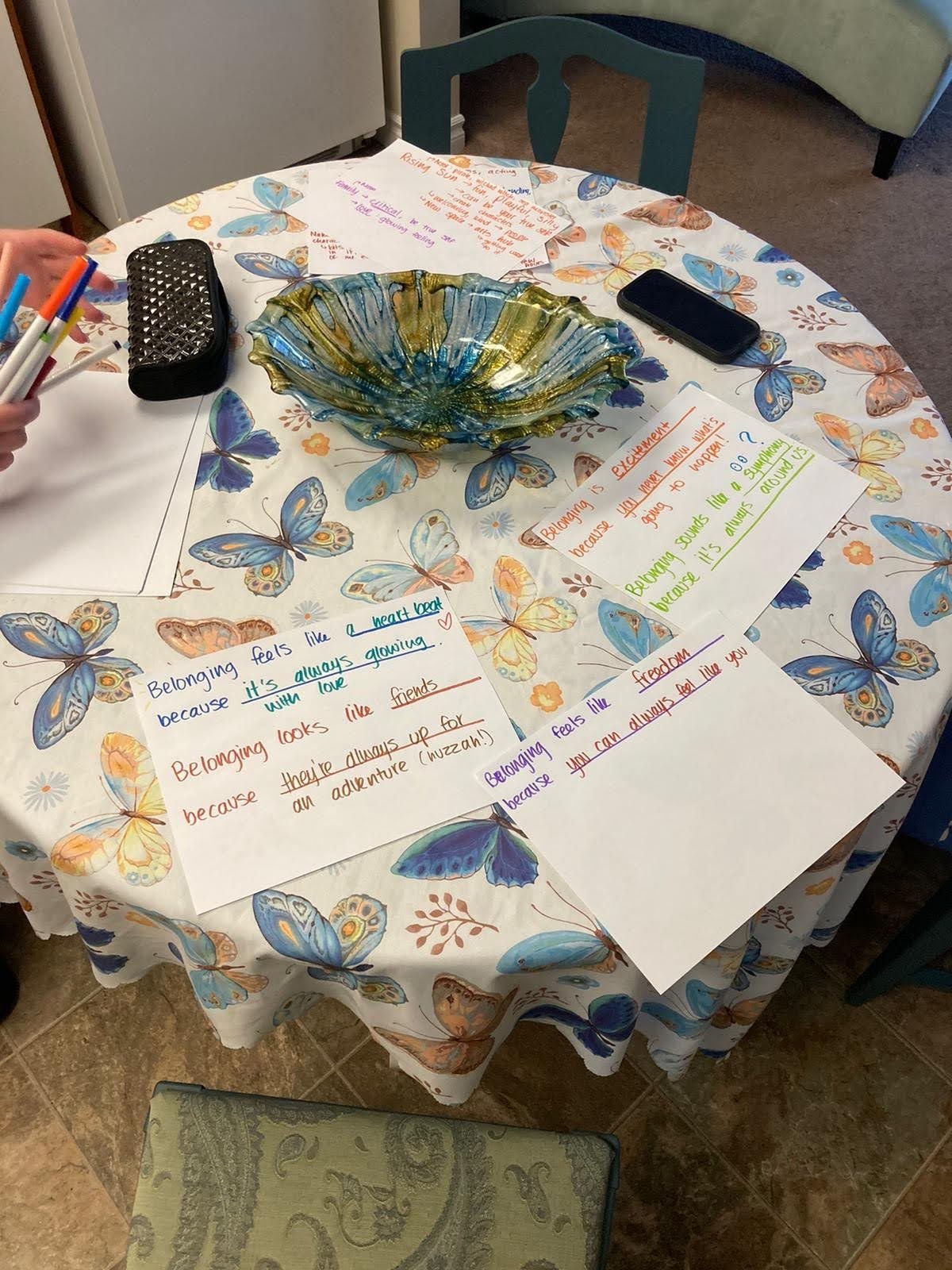
Belonging Metaphors created by Brittany, a young woman with intellectual disability, during a co-design session.
In another example, Brittany, a young woman with an intellectual disability, created several belonging metaphors to be used throughout the toolkit. In these metaphors, Brittany creatively articulates what belonging feels, looks, and sounds like to her.
Looking Ahead
This Fall, leaders within Skills Society are continuing to co-design and test the remaining toolkit content with service providers from around Alberta. Once the content has been created and tested, a hope is to make the toolkit available to service providers across Alberta and beyond.
Interested in having us test the toolkit at your organization? Have some funding to further the project? Reach out to Paige at paiger@skillssociety.ca.
Shoutout to the OT Students Who Helped Develop Exploration #1!
Hayley, Emily, Danielle, and Jada are occupational therapy students from the University of Alberta who helped co-create exploration one in collaboration with support workers. They brought an occupational perspective to the concept of belonging, recognizing that the activities people want and need to do each day are deeply connected to feeling like they belong. This experience shaped them into advocates for belonging, and they are excited to carry this perspective into their future careers as occupational therapists.
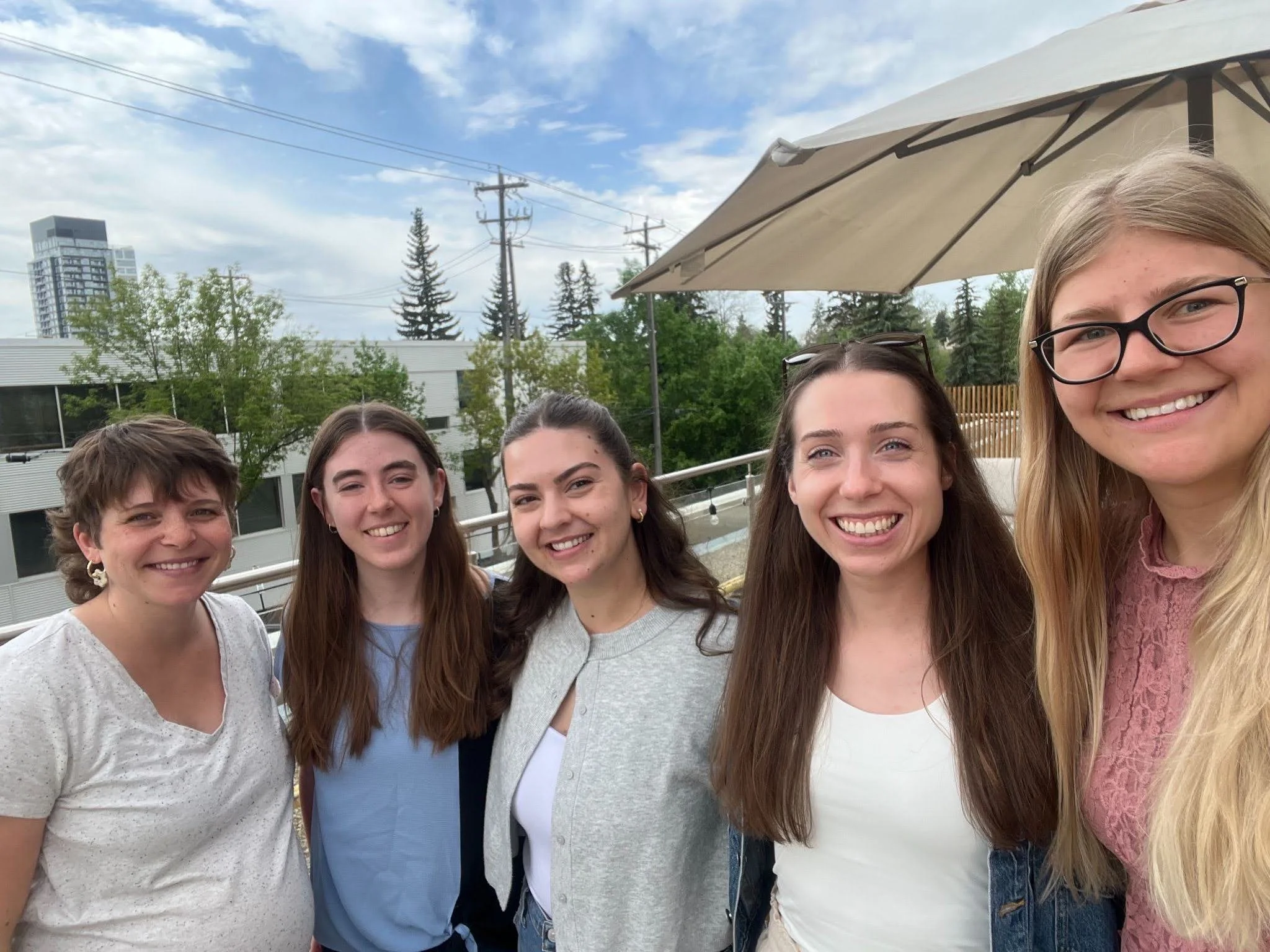
Director of Research and Social Innovation, Paige Reeves, standing with OT Students Hayley, Emily, Danielle, and Jada
The Belonging Toolkit has been generously funded by the Alberta Disability Workers Association (ADWA) and Skills Society.