What do you do when you don't have the answer yet?
You start anyway. You start with your values, with the questions you most want to follow, and with a commitment to paying close attention to what unfolds. In moments of transition, when the systems around us are shifting, it can be tempting to wait for the path to become clear. But at Skills Society, we have learned something important: sometimes the path only reveals itself in the travelling.

The Community Animation Service, one of our social change projects, is a strong example of this. We did not launch this work because we knew what inclusion in apartment buildings should look like. We launched it because we had a deep conviction that housing is more than shelter, that it is the foundation for belonging, connection, and a life well-lived. We had a hunch, grounded in our listening to people with disabilities and their allies, our values around disability rights, and what home really means, that apartment buildings could be something more than transactions between landlords and tenants.
In the pages that follow we share a condensed version of one of our strategic learning briefs from the Community Animation Service. This brief is not a success story with a tidy ending. It is part of our developmental evaluation process and a record of travelling. Of sparks that caught and sparks that fizzled. Of residents who surprised us, and of our own assumptions being gently corrected. Of a service that looks meaningfully different today than it did when we launched it, because we have been willing to let what we are learning reshape what we are doing.
In a year where Skills Society is reflecting on what we are holding onto, what we are letting go of, and what we are still figuring out — this piece sits at the heart of all three. It is an invitation to see learning-by-doing not as a gap in our planning, but as one of our most important values in action.
Intentional Infrastructure for Nurturing Emergent Community
About the Community Animation Service
The Community Animation Service is a part-time, paid position that draws on asset-based community development and systemic design approaches to nurture community connections amongst residents in apartment buildings in Edmonton. Working 6-8 hours per week at each site, the Community Animator strives to create meaningful experiences with residents rather than doing programming for them. The concept was co-created with community members, emerging from The Future of Home: Inclusive Housing Solutions Lab — an 18-month social innovation process that brought people with disabilities, allies, service providers, housing providers, and architects together to ideate around inclusive, accessible, and affordable housing.
The Question We Are Following
What are we learning about building community in apartment buildings with affordable units?
To respond to this question we drew on a Developmental Evaluation (DE) approach, incorporating insights from interviews with 5 residents, the property owner, property manager, Community Animator, and team leader; a resident survey with 41 respondents; reflexive notes from weekly check-ins; monthly Animator reports; and resident and Animator posts on the building's Facebook page.
The Context We're Working Within
Our work takes place in Treaty 6 territory on lands known as amiskwaciwâskahikan or Edmonton. Edgemont Flats Apartments are owned and operated by Leston Holdings, a family-owned developer and property manager. There are 334 units across two buildings in Edgemont, a western suburb of Edmonton, of which 209 are designated affordable and 67 are rented at 50% below market value. Fifteen residents experience intellectual disability and receive daily living support from Skills Society.
In today's political climate, housing is often thought of as a commodity and transaction — something physical to be purchased and used. Property management similarly tends to focus solely on rent collection and maintenance. As The Trampoline Effect notes, our systems "count only certain needs — for safety, shelter, food, income, and physical care" while having "few ways of understanding people's needs for adventure, purpose, connection, or growth."
Residents we spoke with reflected the costs of this approach. Thalia shared that in previous housing she "always had to worry" and felt property owners "don't want me to live here" — a perception built through constant notices that made her feel she could not "just live." Ciara-Mae's observation captures what has too often been the norm:
"Just walking through Edgemont Flats I can say hi to so many people. There's a lot of people I know by name. That's not normal."
But what if we brought a different orientation to how we "do" housing? What if we refused to reduce it to commodity and instead saw housing as the foundation for home, belonging, and social connectedness? That is what the Community Animation Service is about — bringing intentional infrastructure to apartment buildings to nurture emergent community.
How We Are Trying to Do Things Differently
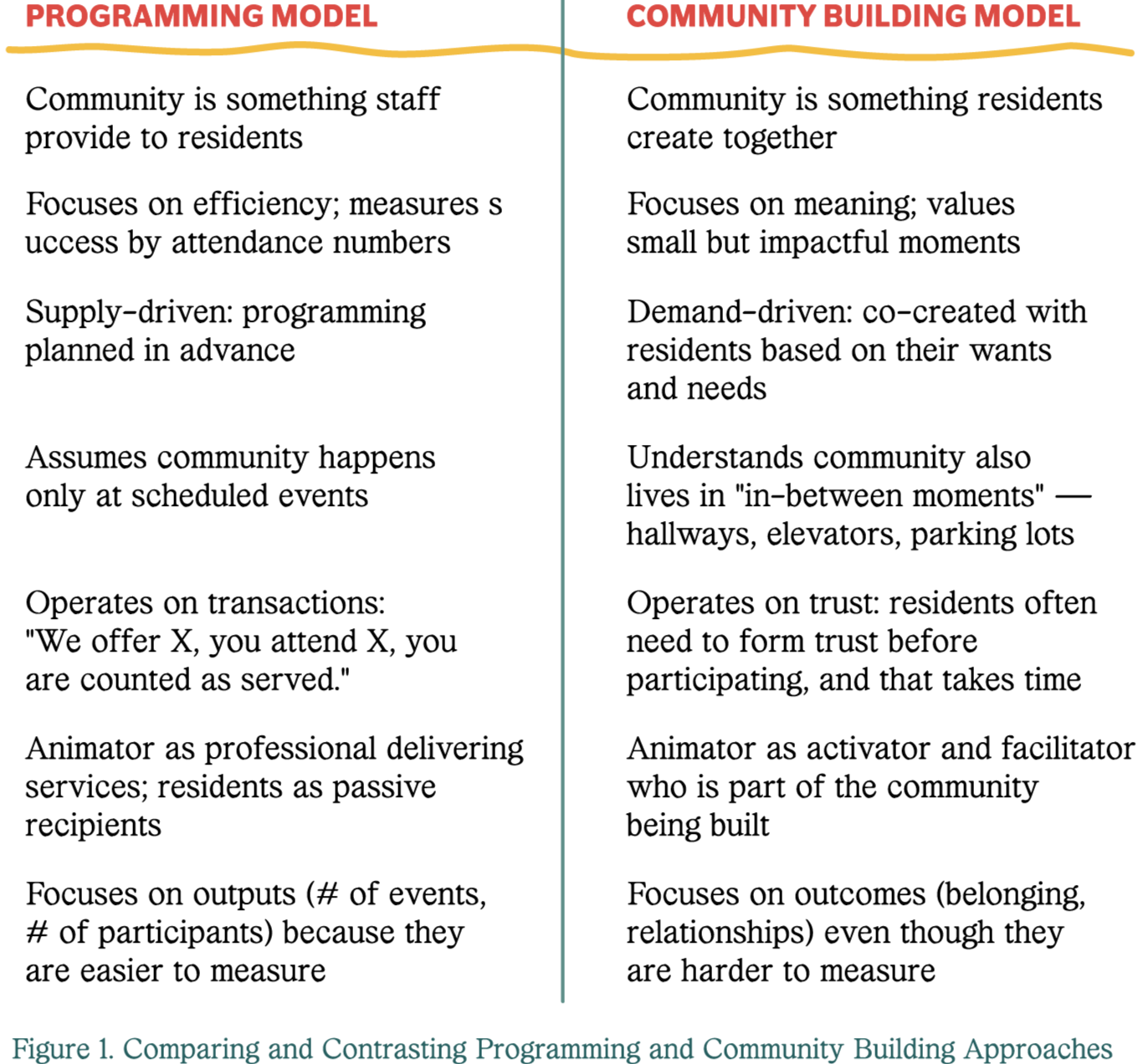
Rather than operating from a service delivery model, the Animation Service operates from a community building model. Service delivery models — where staff plan activities, promote them to residents, and measure success by attendance — position residents as passive consumers rather than makers of community life. A relational community building approach recognizes that genuine community cannot be programmed, but can be nurtured by creating the right conditions. The Animator's role is not to deliver programming, but to create infrastructure and opportunities that residents can use to build community together, at their own pace, in their own ways.
Three Scales of Intentional Infrastructure
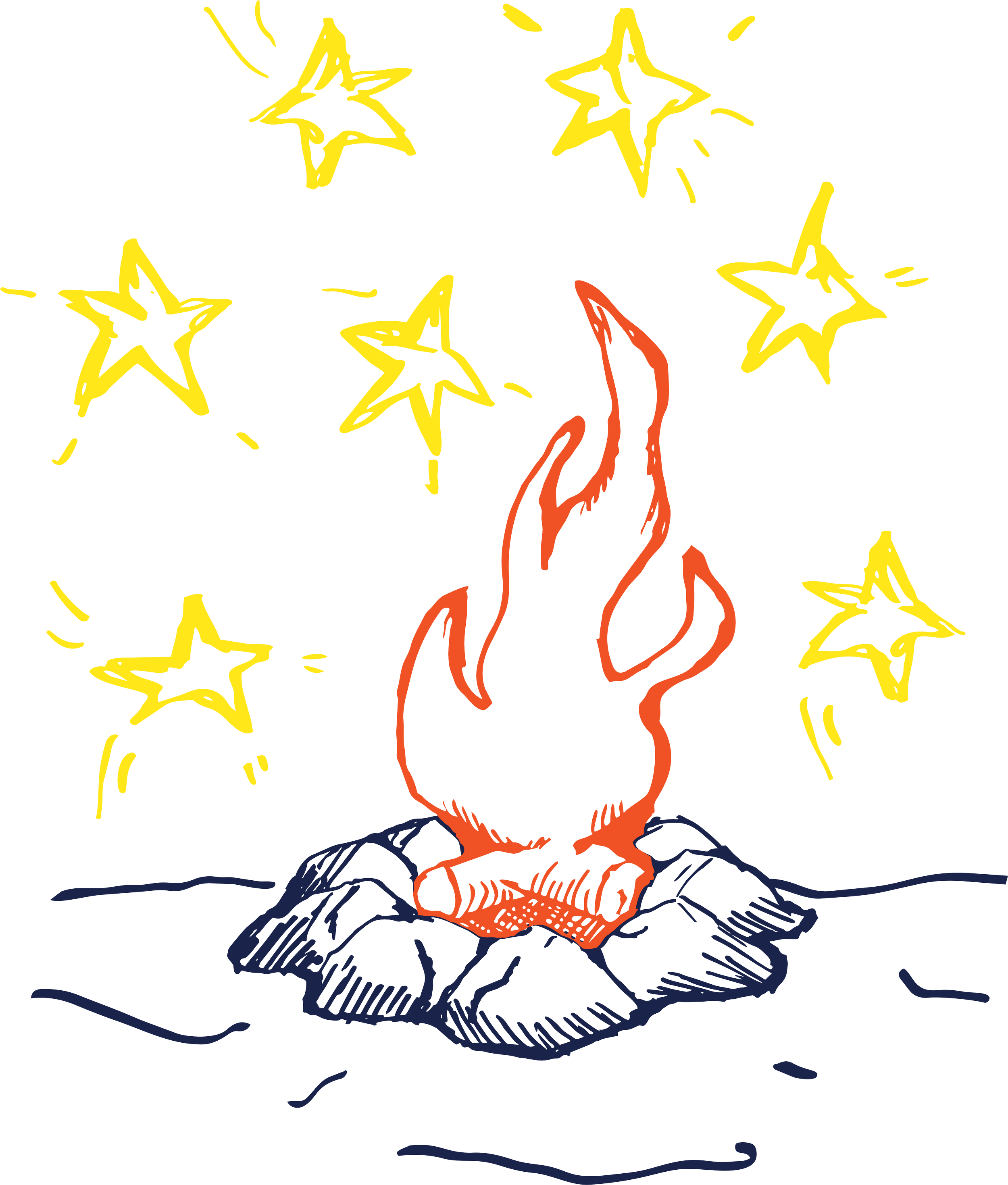
A key learning from the Future of Home Lab is that genuine community often needs to be nurtured and does not spontaneously form. While it might seem counterintuitive to put in place formal infrastructure for building emergent community, our hunch is that it is necessary — so long as that infrastructure is grounded in relational values (slowness, care, presence, trust) rather than programming logic. In this brief we use the metaphor of a fire to describe what we are building.
What if we think of the work of building community as similar to that of building a fire? This work requires us to build the container the fire burns within, spark the flames, and watch the fire grow, feeding it periodically to sustain it.
Intentional Infrastructure to Nurture Emergent Community
The Container — The Spark — The Fire
THE CONTAINER: The structures and systems that lay the foundation for emergent community
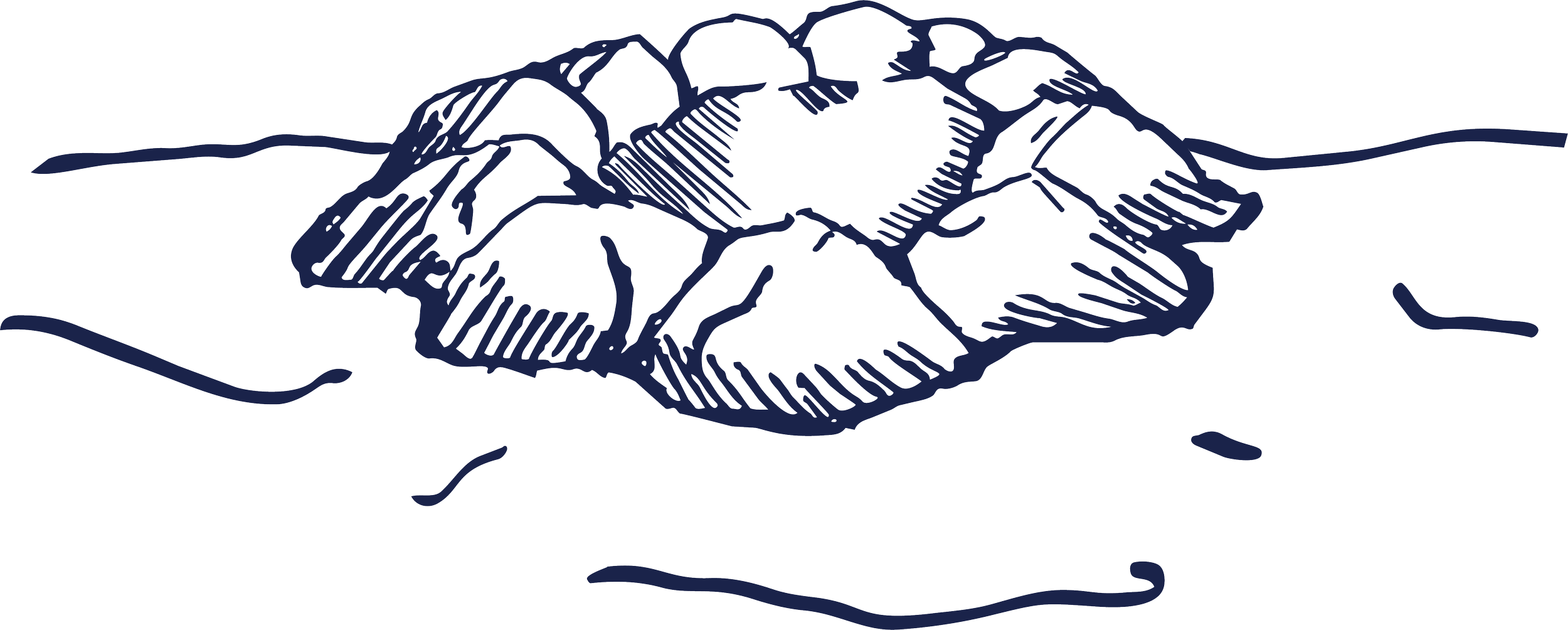
Like a fire pit constructed with stones, the container creates the boundaries and support that make community possible without it fizzling out or spreading destructively. It says to residents:
"You are wanted here. Management is committed. Resources are dedicated to this. Let's build your vision with your neighbors."
The Animator Role is a distinct paid position (not volunteer, not an add-on) with dedicated hours that support consistent presence. It is framed as an amenity for all residents offered in partnership with the property owner, and the Animator brings specific knowledge in asset-based community development and systemic design.
Sustainable Funding Model. Rather than relying on grant funding, the Animation Service is funded in full by the property owners as an amenity factored into the building's operational budget — supporting long-term sustainability.
Dedicated Resident Budget. Built into the operating budget, this allows the Animator to say yes to resident ideas without a complex approval process, safeguarding dollars for supplies, snacks, honorariums, and space upgrades.
Partnership with Property Management. The Animator works closely with the property manager. We have learned how important it is for them to build a genuine partnership — clarifying roles and communication so they support rather than undermine one another. Equally important is having a property management partner that values community and holds space for emergence and experimentation.
Physical Spaces. We learned that how space is structured can both hinder and support emergent community. Initially apprehensive about the lack of large shared gathering spaces, we were pushed to get creative: using the parking lot for summer BBQs, the lobby for baking swaps, and small lawns for gathering circles. Simple enhancements — cushions, umbrellas in the community garden, handmade signage — made spaces dramatically more inviting and increased resident use. We've learned you can spark community even without large spaces.
Oversight and Support Structure includes weekly check-ins between the Animator, evaluator, and project manager; monthly check-ins with project partners; and a developmental evaluation approach that supports real-time decision-making. The team's mix of expertise in asset-based community development, disability rights, social justice, and systemic design helps keep the work anchored in community development rather than slipping into service provision.
THE SPARK: The platforms, rhythms, and opportunities that invite resident participation

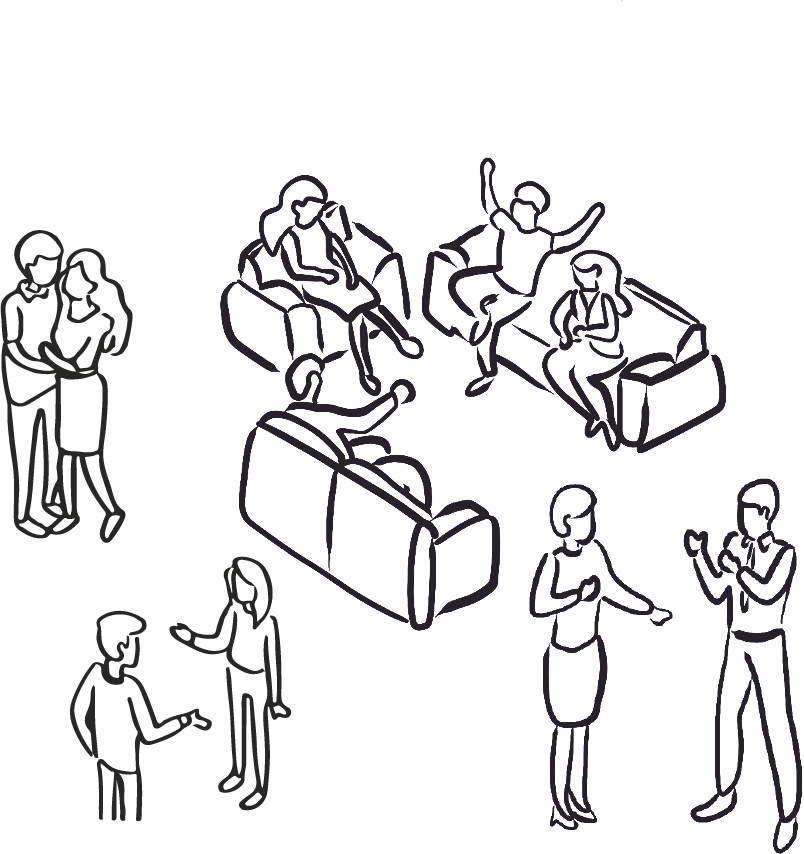
Sparks are intentional actions and rhythms that create opportunities for community to grow. You cannot force fire to catch, but you can create many sparks and hope some ignite something bigger. The Animator's role is to keep creating sparks, notice when residents create their own, and be there to support when something catches.
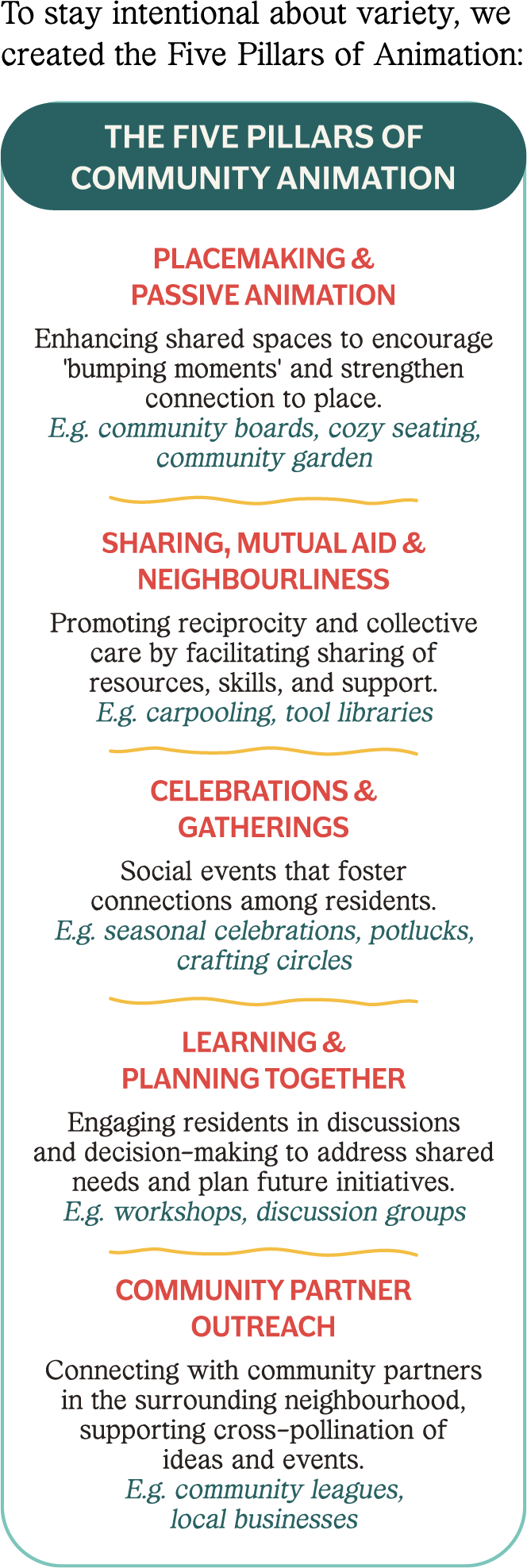
Diverse Invitations. We noticed early that the default for community engagement tends toward large-scale events — but these can fail to create meaningful connection and are resource intensive. Residents told us they wanted diverse ways to engage, with many preferring one-on-one or low-commitment interactions. As the Animator noted: "Passive opportunities to participate — not having to sign up for something — are helpful. The fire and hot chocolate, the monster donut decorating, the drop-in games night — these seemed more successful." To stay intentional about variety, we created the Five Pillars of Animation:
Bridging and Connecting. The Animator also sparks community by connecting residents based on shared interests, skills, or needs. Strategies have included creating Asset Keys for residents to identify what they can offer the community; listening for offerings and doing individual "matchmaking" (such as connecting a newly graduated barber with interested neighbours); and encouraging residents to post on the Facebook page to celebrate one another's successes.
Creating Space for Residents to Initiate and Lead. Sparks are most likely to ignite when they come from residents themselves. The most successful mechanism has been the Animator watching for opportunities to affirm and support resident-led ideas as they arise naturally — for example, supporting a young mother who wanted to host a clothing and toy swap, or suggesting that a resident who loved stargazing host a star gazing night.
Building Trust Through Consistent Presence. Before residents will participate, there must be trust. The Animator has built this through a visible, consistent presence — posters, regular Facebook posts, door knocking, tabling in the lobby, and small gestures like handing out freezies or seed packets — not through set office hours, but through genuine ongoing availability.
Stewarding Platforms for Connection. Platforms that let residents communicate with one another make community visible and help residents realize they are not alone. After a Discord channel failed to gain traction, we pivoted to a Facebook page, which is showing promising signs. The Community Board — a whiteboard with rotating weekly prompts — took off with almost no nudging from the Animator, becoming a lively space for residents to share ideas and learn from one another.
Persistence and an Openness to Learn and Let Go. Some sparks catch immediately. Some smolder and need tending. Some don't catch at all. The book club and crafting circle had success for months before attendance dwindled with the change of season. Movie night never found its audience. The Animator reflects:
"When people wouldn't show up or weren't volunteering despite my invitations, it was discouraging. I would have little glimmers here and there that were positive that would keep me going." This work requires patience, experimentation, and emotional resilience.
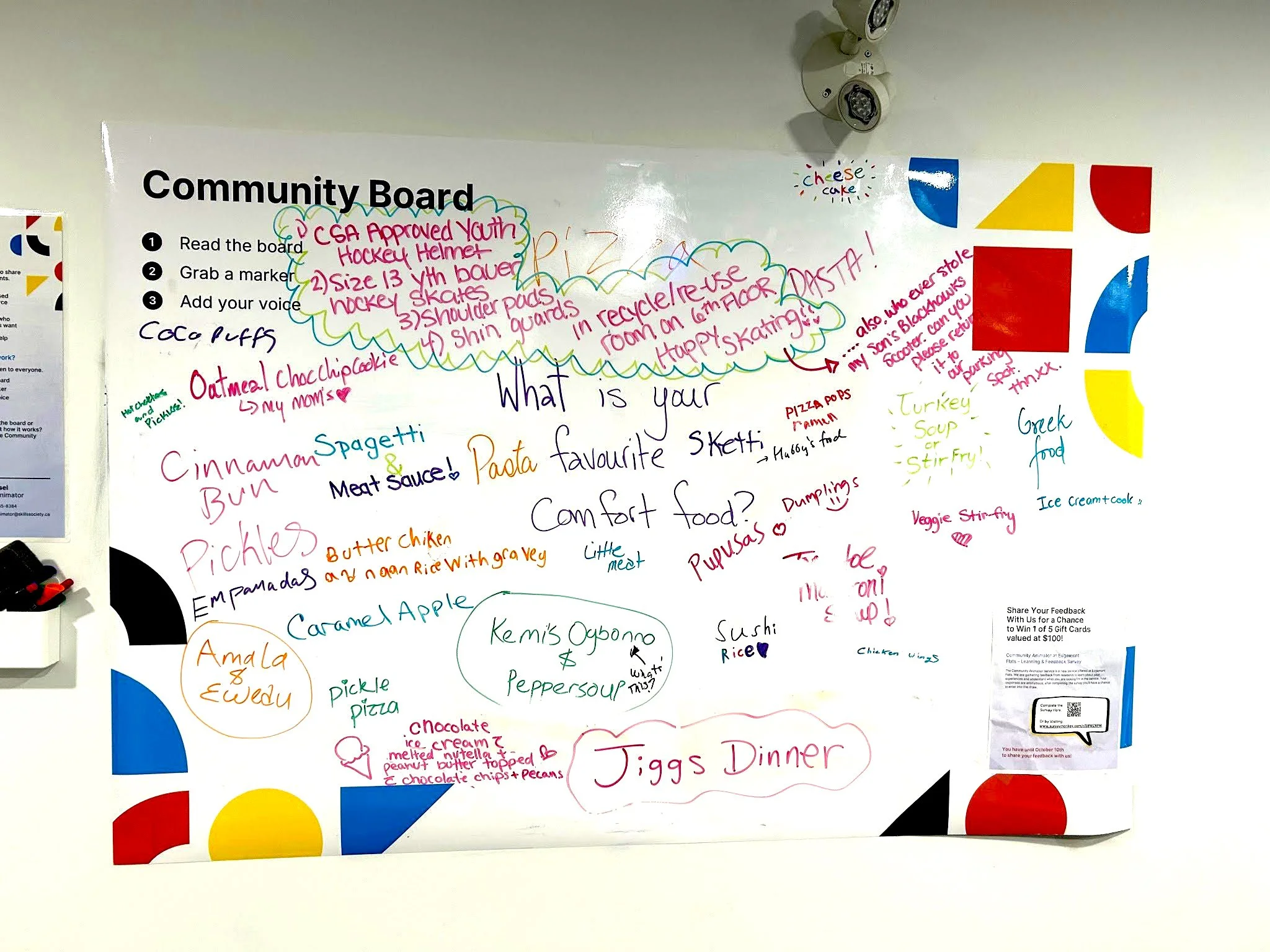
The Community Board, a whiteboard with prompts that are switched out weekly, creates space for residents to share insights, ideas, and information and learn from one another in a low stress, anonymous way.
THE FIRE: The community life that emerges — organic, resident-led, everyday relational moments
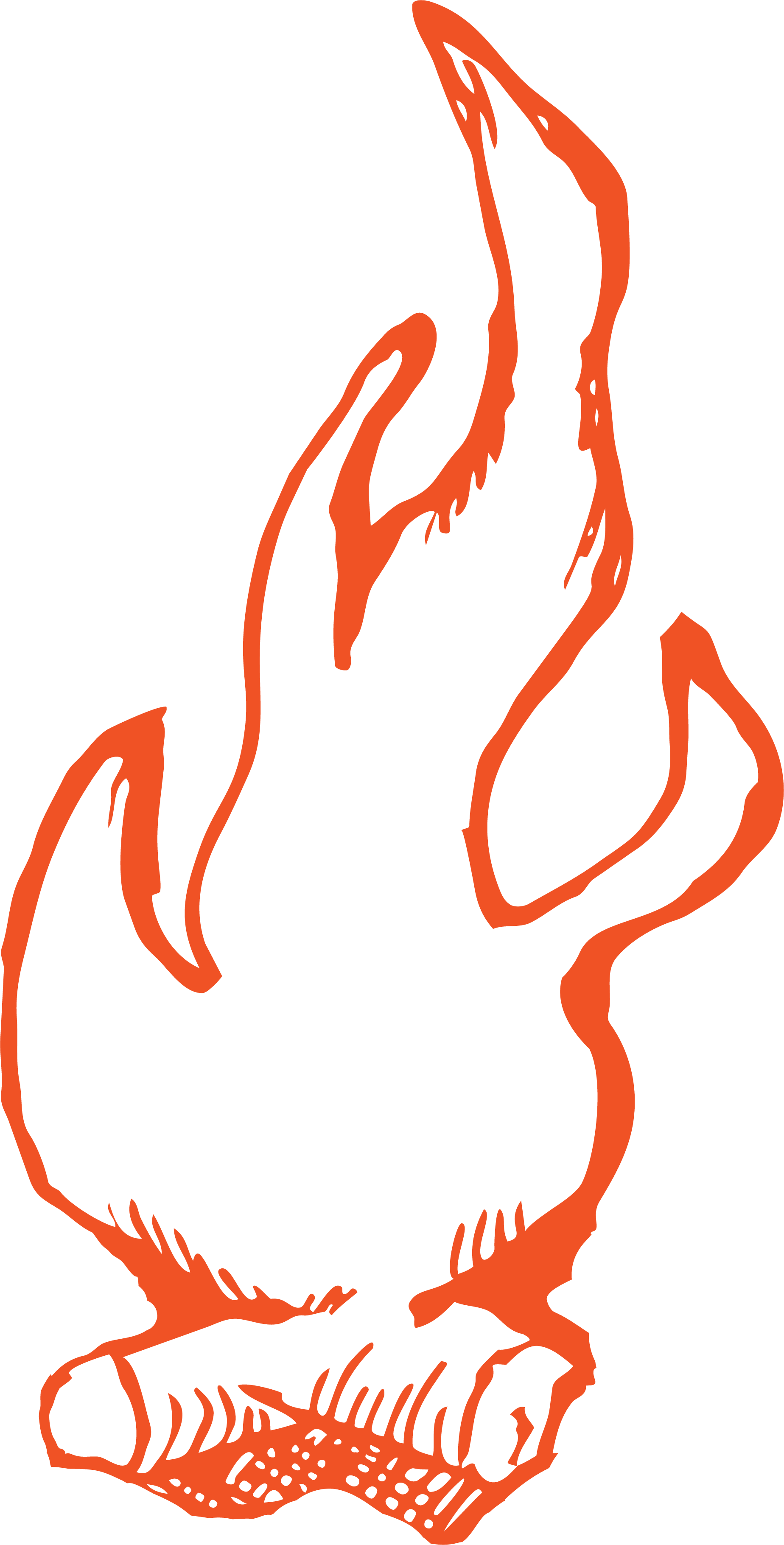
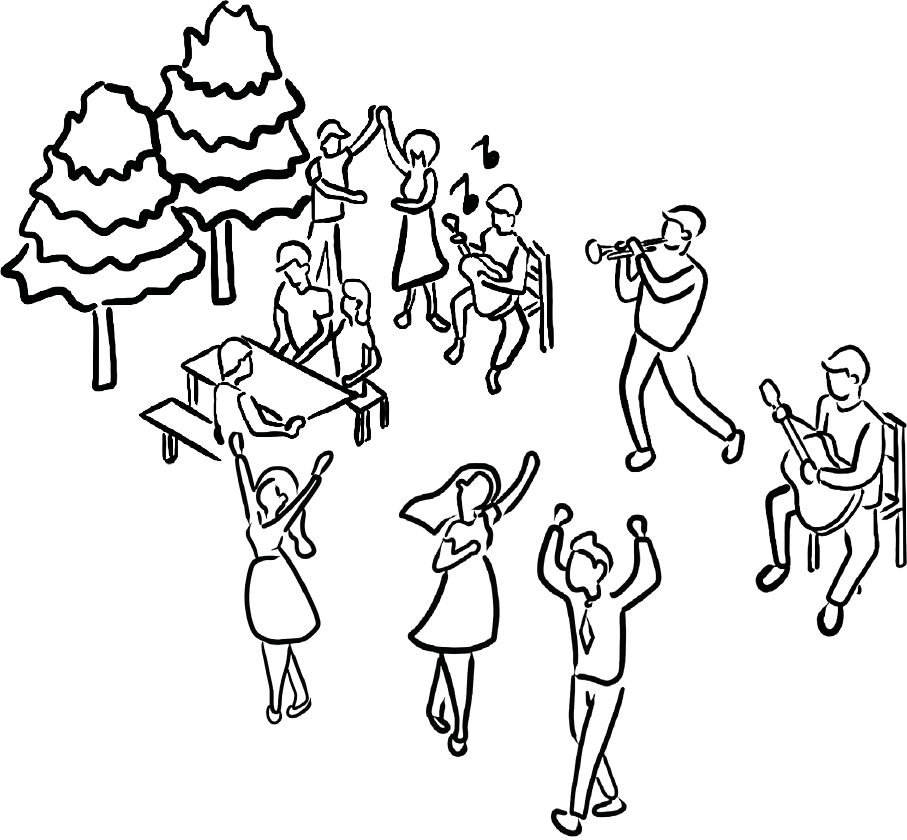
The fire is community actually alive — relationships forming, residents taking initiative, care flowing between neighbours, and a sense of belonging settling in. We are just beginning to see it ignite at Edgemont Flats.
Sense of Connectedness Growing. Several residents have expressed an increased sense of connectedness. 70% of survey respondents report that they value the relationships they have built, feel safe, and feel they belong at Edgemont Flats. As residents shared:
"I love the sharing circle — you get to know other people's stories; people I wouldn't normally connect with" (Ciara-Mae); "The casual 'hey' now that I know people helps a lot" (Thalia); "I feel welcome, respected, and appreciative of both my neighbours and the building staff" (Julia); "I think this is a great program. I feel it helps many people connect and feel like Edgemont Flats is more of a community than just a rental apartment" (Sylvia).
Taking Care of One Another. Reciprocity and neighbourly care are emerging as defining features of the community being built. Ciara-Mae has become close friends with Cara and now drives her to medical appointments, saying "I hate the idea of her waiting for DATS." Leon has befriended Andrew, a resident who uses a power wheelchair, and now assists him with daily tasks: "Andrew and I got to know each other really well over the summer. We take my dog for walks. My dog sits on his lap. I assist him to eat." Though just two examples, these relationships are deeply meaningful — and in a community development approach, quality of connection matters more than quantity.
Taking Initiative and Ownership. We are seeing early signals of residents taking leadership. Leon hosts game and sports nights. Cara hosted the crafting circle. Ciara-Mae is the keyholder for shared resident spaces and attends nearly every Animator-associated event. Each has articulated a natural orientation to contributing: "If someone needs help, I'm there to help. That's what we're put on this planet for" (Leon); "If we don't support the program, we're not going to have a program" (Ciara-Mae).
That said, meaningful work remains. Over 50% of survey respondents reported not yet having close relationships within the building that provide a sense of belonging. Extending the Animator's reach and deepening resident engagement remains a central focus for year two.
The Container, The Spark, The Fire Working in Harmony
These three scales work in concert. They are not a sequential checklist — each requires continual attention and care throughout the community building journey. That said, the container and spark naturally demand more focus early on. Once sparks catch, the fire can begin to build on its own, so long as it is tended. In practice, this flows something like:
The Animator creates supportive conditions → residents take ownership → community becomes self-sustaining in some domains → the Animator can focus elsewhere → the Animator circles back to re-ignite as needed.
Conclusion and Future Directions
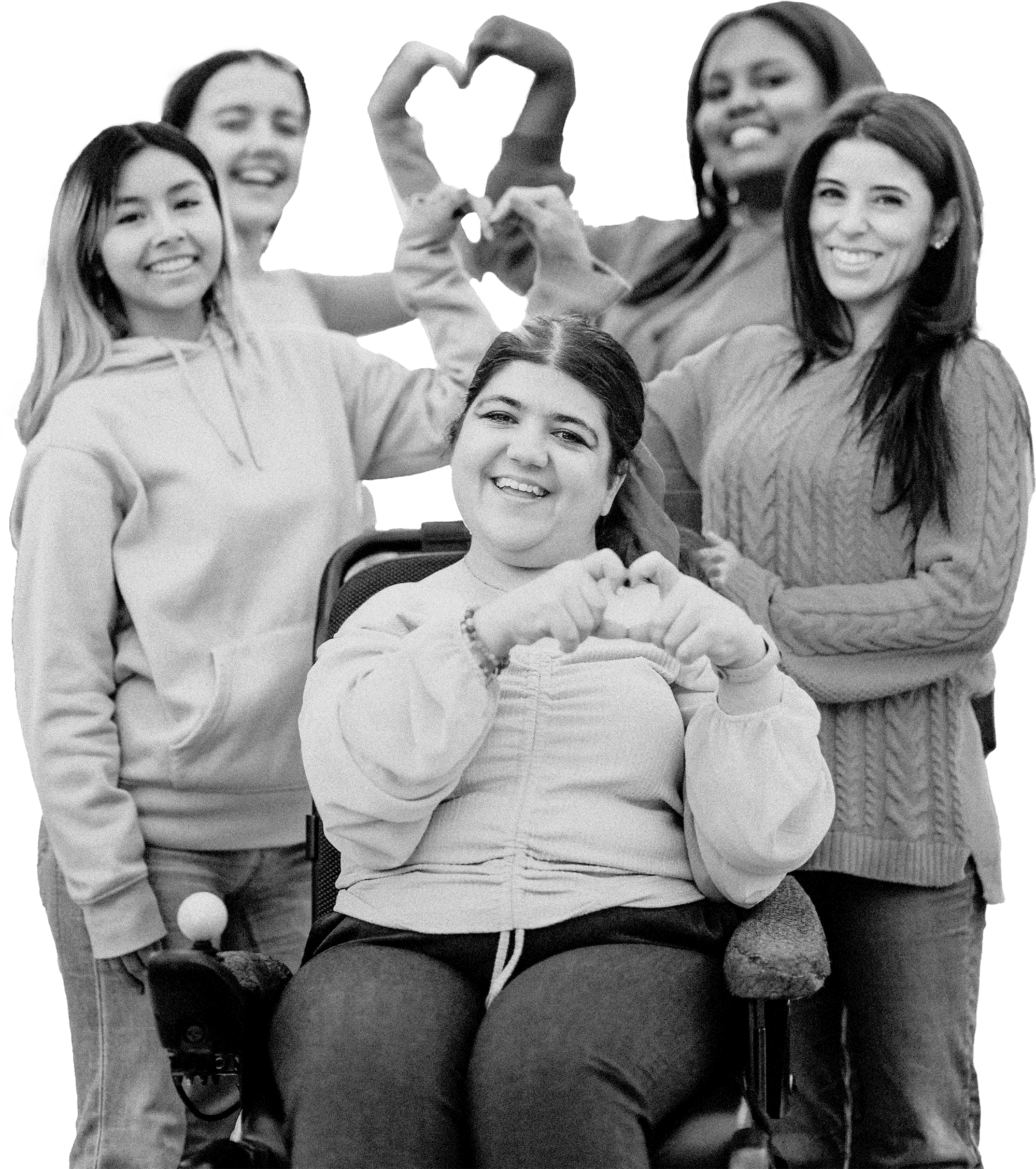
After one year piloting the Community Animation Service at Edgemont Flats, we are learning that building community in apartments requires more than programming events — it requires creating the conditions where community can emerge organically. This means investing in formal infrastructure (the container), the Animator's activation work (the spark), and the life community residents create together (the fire). It means valuing slow trust-building over efficiency, small moments over large events, and resident leadership over programmed outcomes. And fundamentally, it means treating housing as more than commodity — as the foundation for belonging and home.
Promising signals include strong early resident leadership, measurable increases in belonging and satisfaction, successful passive animation, and residents' natural helping orientation activating. Important learning edges remain: extending and deepening resident engagement, strengthening Animator communications, developing a sustainable scaling model, and continuing to create diverse entry points for participation.
The service has recently launched at a second site with Civida — offering crucial opportunity to test whether these learnings hold in different contexts. We continue to watch, learn, and adapt, designing the map as we go, guided by what actually builds community rather than what is easy to measure.
The fire is catching. Our work now is to tend it carefully, learn from it deeply, and share what we are discovering about how to make an apartment a home.
This piece was written by Paige Reeves, Director of Research and Social Innovation
Leaders Involved in the Community Animation Project
Andrea Streisel, Manager of Community Animation
Autumn Sanders, Coordinator of Communications & Innovation
Paige Reeves, Director of Research & Social Innovation
Rebecca Cruthers, Director of Continuous Improvement & Innovation
Annand Ollivierre, Director of Development and Community Engagement